NPR relies on AP math, not declarations, to call 2026 races
The network will not name winners until outstanding ballots make a candidate's lead mathematically unassailable, a process that often occurs before counting finishes.
By Leila Reynolds ·
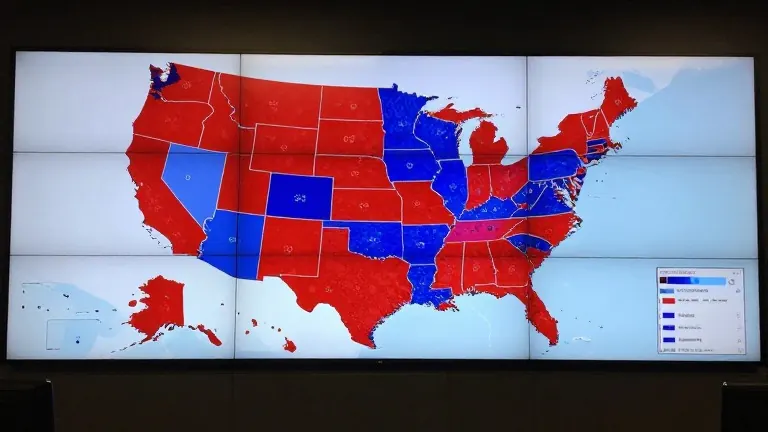
NPR will not announce a winner in the 2026 election based on a candidate's victory claim or concession speech. Instead, the network depends entirely on the Associated Press to determine when a race is over. The AP uses a rigorous mathematical model to decide when a lead is safe, ensuring that no remaining ballots can change the outcome.
Election night involves counting votes for 435 House seats, 35 Senate seats, and 36 governorships. The AP has called races since 1848. Its current process involves analysts and decision editors who sign off on every call for presidential, Senate, and gubernatorial contests, as well as significant House races. These teams do not look at total vote counts alone. They analyze data county by county and, where available, by ballot type, including in-person and advance mail votes.
The AP’s race calling team maintains constant contact with vote counting staff. They track the number of outstanding ballots against those already counted. The team then calculates the likelihood of a candidate remaining ahead based on the geographic origin of uncounted votes and the demographic makeup of those areas. This analysis determines if a trailing candidate can realistically close the gap.
A race can be called before 100% of votes are counted. The AP states that it calls a race as soon as a clear winner is determined. This is a declaration, not a prediction or projection. The organization waits until it is certain that the leading candidate will hold the position once all votes are tallied. The AP does not name apparent or likely winners if it lacks definitive proof.
This approach mirrors the 2000 presidential election, where the AP declined to call the Florida race between George W. Bush and Al Gore. The margin was too tight to guarantee a winner. The AP now backs every call with transparent reporting that details the research and analysis used. This explanatory journalism is a standard part of its election coverage.
NPR will use AP data to populate its real-time election results pages. The network will alert broadcast and digital audiences on air and online when a race is called. It will also distribute this information to its hundreds of member stations. Coverage will continue beyond election night as counting proceeds. NPR will track the balance of power in the Senate and House as final results emerge.
The process is designed to avoid speculation. The AP does not engage in guesswork if it cannot definitively say a candidate has won. The organization waits for surety, even if that means a slight delay. This method has built trust among hundreds of news organizations that rely on the AP's race calls for their own reporting.