Midterm Math: How Both Parties Aim to Defy Historical Seat Loss
With polls open, Republicans and Democrats deploy distinct strategies to counter the predictable erosion of the president's party in congressional elections.
By Pedro Barnes ·
Political historians have long noted a consistent pattern in American midterms where the president's party typically loses ground. This year, that historical trend serves as a backdrop for a high-stakes contest that will determine control of Congress for the final two years of President Donald Trump's second term. The Associated Press describes the election as a referendum on the administration's performance, with voters grappling with high prices and dissatisfaction over the war with Iran. Both parties have crafted their campaigns with the specific goal of breaking from this norm, yet the arithmetic of the races remains tight.
Republicans, who hold the White House, are bracing for potential losses in the House while fighting to maintain their majority in the Senate. Ballotpedia notes that Democrats need a net gain of three districts to take control of the House, a threshold that seems modest but is complicated by the fact that Republicans can lose no more than two seats. In the Senate, the stakes are equally precise, with Democrats requiring a net gain of four seats to secure a majority. With 35 Senate seats on the ballot, the margin for error is razor-thin for the controlling party.
The Associated Press reports that one or two seats could tip either chamber, a reality that has driven intense spending and strategic maneuvering. This election is likely to be the most expensive in history, with Republican committees outraising and outspending their Democratic counterparts at the committee level. This financial advantage was bolstered by Trump-affiliated groups and contributions from Elon Musk. However, at the candidate level, Democrats outraised their opponents, suggesting a different distribution of resources on the ground.
Republicans have relied heavily on redistricting to protect their seats, a strategy that has been a cornerstone of their midterm defense. Six states, including California, Florida, Missouri, North Carolina, Tennessee, and Texas, are using new congressional maps after mid-decade redistricting. Ohio also utilizes a new map. The goal of these new boundaries is to create districts that favor Republican candidates, but the Associated Press notes that new districts in Florida and elsewhere may not vote as they were drawn, introducing uncertainty into the calculations.
Democrats, meanwhile, are pursuing a strategy centered on turnout and economic messaging. DCCC Chair Rep. Suzan DelBene stated that the American people are angry and want change, a sentiment echoed in polls showing that about seven in 10 adults believe the country is heading in the wrong direction. The party is focusing on the cost of living, a theme that resonates with voters who report paying more for taxes, healthcare, and daily necessities. This approach aims to mobilize the base and swing undecided voters who are dissatisfied with the current economic conditions.
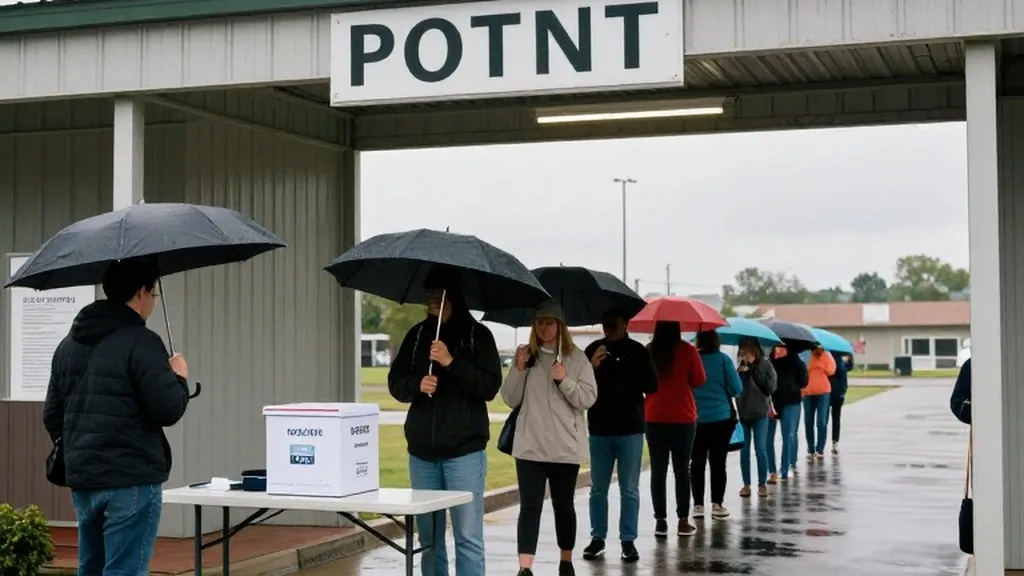
RNC Chairman Joe Gruters emphasized that everything depends on turnout, asserting that if the party can mobilize its voters, they will win. This focus on turnout is critical given the high number of battleground districts and the tight margins in several Senate races. The Associated Press notes that more than 57 million people had already voted as of Monday, surpassing the early vote of four years ago in many closely watched states. This high level of pre-election participation suggests that both parties are successful in driving early engagement, setting the stage for a heavy turnout day.
In the Senate, the battlegrounds are scattered across the country, with key races in states like Kansas, Georgia, and Michigan. Kansas, a reliably Republican state, has become central to the fight for Senate control, with the race between Roger Marshall and his opponent viewed as a toss-up or lean Republican by various ratings. In Georgia, Sen. Jon Ossoff faces a competitive challenge, with the state leaning Democratic in ratings. These races are crucial because a net gain of four seats is required for Democrats to take the Senate, a hurdle that seems high but is not insurmountable given the number of competitive seats.
The governor races also play a significant role in the broader narrative of the midterms. Democrats hope to hold a majority of governorships for the first time in two decades, a goal that would signal a broader shift in power. Republicans hold 26 governor's offices, while Democrats hold 24, with 36 races on the ballot. The Associated Press identifies several competitive governor races, including Texas, Florida, and Iowa, where the outcome could influence the party's future trajectory and its ability to govern at the state level.
Voters are making their choices in a context where the administration has continued to make claims about voting fraud, including allegations that noncitizens vote in large numbers. The Justice Department has threatened to prosecute local election officials, and the administration filed lawsuits in Alaska and California related to the certification of results. These actions have raised concerns among Democrats about interference, while Republicans argue they are ensuring the integrity of the process. The federal judge's temporary bar on the administration's plan to prevent noncitizen voting adds another layer of complexity to the administration of the election.
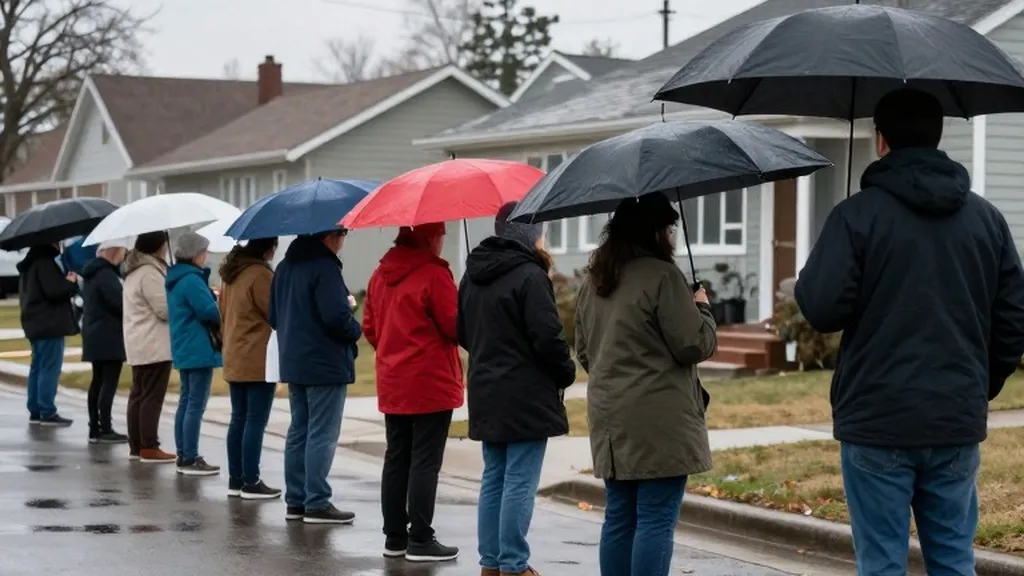
As polls open across the country, the focus shifts to the ground game and the ability of each party to deliver its message to the right voters. The Associated Press notes that Trump held dozens of rallies, ending in Salina, Kansas, where he urged voters to pretend he is on the ballot. His schedule included stops in Mississippi, South Carolina, and Texas, highlighting the administration's effort to energize the base. Many Republican candidates kept their distance from the president, a strategy that reflects the complex dynamics of running under a polarizing figure.