Statistics Lebanon: 66.4% of Shi'ites Want Army to Hold Hezbollah's Weapons
A September survey shows a sharp shift in sentiment, with most respondents favoring the Lebanese Army over the militant group for national security.
By Pedro Barnes ·
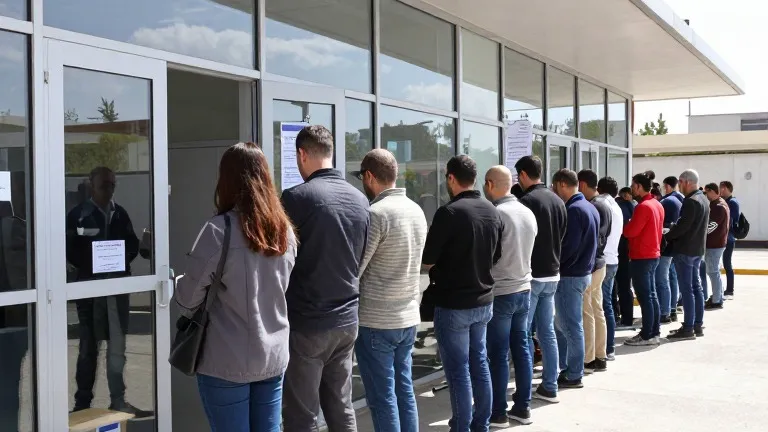
A survey released in mid-October indicates that a majority of Lebanese Shi'ites now support transferring Hezbollah's weapons to the state. The data, collected in September by Statistics Lebanon, challenges the long-standing premise that the militant group is the primary guarantor of security for its core constituency. The findings were reported by Israel's public broadcaster KAN and the Lebanese website Kataeb.org.
The poll surveyed 800 Lebanese Shi'ites. It found that 66.4% supported handing Hezbollah's arsenal over to the Lebanese state, while 29.6% preferred the group retain its weapons. Hezbollah has historically argued that its military capacity is essential to defending Lebanon against Israel. The new numbers suggest a growing preference for state sovereignty over parallel military structures.
Respondents expressed high confidence in the national military. About 78.5% said they trusted the Lebanese Armed Forces, and 51.1% identified the army as the best institution to guarantee long-term security. In contrast, only 16.5% chose Hezbollah for that role. Furthermore, 71.1% believed decisions on war and peace should rest solely with the state, while just 5.9% wanted Hezbollah leadership to play a larger role in shaping the country's future.
Sentiment regarding the group's recent performance was mixed. Some 67.4% said Hezbollah had failed to meet its goals in the war with Israel or had achieved only some of them. A further 42.1% voiced disappointment, anger, or concern about its leadership and the conflict's consequences. Despite this criticism, 59.5% still expressed some trust in the organization, including 37.1% who reported a great deal of trust.
Roi Kais of KAN noted that Hezbollah's support networks and the status it confers on the sect sustain its strength. He suggested the group remains powerful as long as no other entity fills the vacuum left by the state. This view contrasts with an analysis by Orna Mizrahi and Moran Levanoni at Israel's Institute for National Security Studies. They cited a May 2026 survey by Lebanon's Information International in which 87.5% of Shi'ite respondents opposed disarming Hezbollah. Mizrahi and Levanoni argued that weakening the group requires a stronger Lebanese army and financial support from Western and Gulf nations to replace Hezbollah's services.
Local indicators of wariness also emerged. In the southern city of Tyre, property owners reportedly opposed opening a branch of Al-Qard Al-Hassan, a Hezbollah-linked financial institution, in their building due to fears of Israeli strikes. Such branches have been targeted previously. Hezbollah has announced aid of up to $14,000 for eligible families in Beirut and its southern suburbs whose primary homes were destroyed, and up to $12,000 elsewhere.
Hezbollah has suffered major military and leadership losses, including the killing of Hassan Nasrallah in September 2024. A new war began in March 2026 and caused heavy destruction in villages in southern Lebanon. The group continues to provide social and economic services, but the poll suggests its political base may be evolving.