Voters Flip Congress and 36 State Offices in Sweeping Midterm Rejection
Democrats seize control of both federal chambers and five governorships, ending two years of unified Republican rule in Washington.
By Ivan Dvorak ·
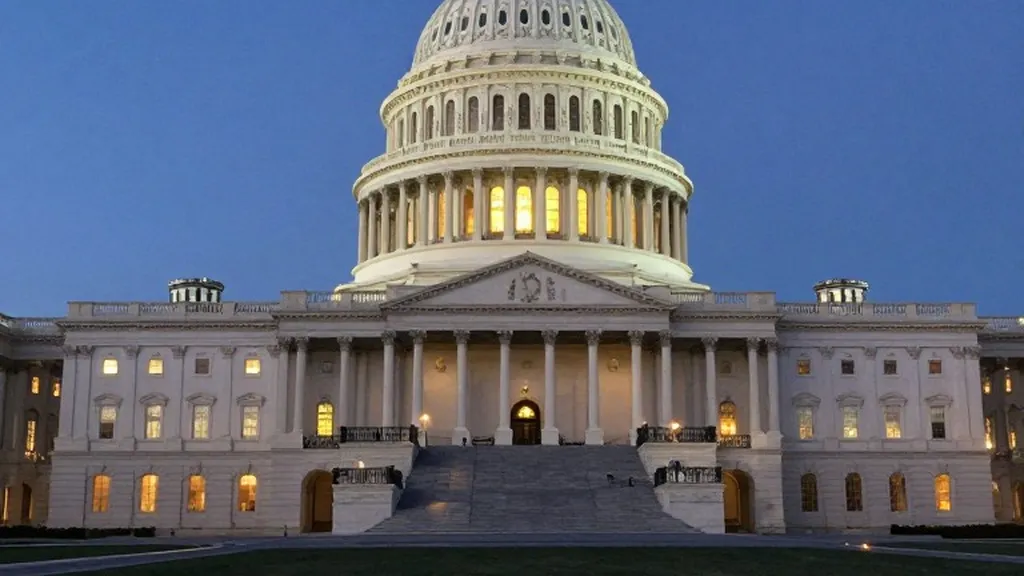
Voters cast decisive ballots on Tuesday, November 3, 2026, handing Democrats control of both the U.S. House of Representatives and the U.S. Senate. The Associated Press reported that this shift ends a two-year period of unified Republican control in Washington and establishes a divided government for the next two years. The results reflect a broad rejection of the president's party, driven by voter dissatisfaction with the economy and the ongoing war in Iran. Democrats will assume power in the new Congress when it convenes on January 3, 2027, with wide majorities in both chambers.
The U.S. House of Representatives saw a dramatic partisan change, with Democrats winning 233 seats against 138 for Republicans. This marks a net gain of 30 seats for the Democrats, a significant shift from the 220-215 Republican majority held before the election. In the U.S. Senate, Democrats won 20 of the 35 seats on the ballot, while Republicans won 13. Two Senate races remain uncalled, but Decision Desk HQ projected that Democrats would win control of the chamber. Seven Senate seats changed party hands, all moving to Democratic control.
The presidential party's losses were not limited to federal offices. Republicans in eight states redrew congressional district boundaries over the past year in an effort to secure an edge, but the plan failed to prevent a Democratic surge. The Associated Press noted that Republicans lost most of the Democratic-held seats they had targeted for flipping. In Texas, Democrats took control of the state House for the first time since 2002. This victory was part of a series of sweeping gains that shifted the balance of power in several battleground states and Republican-leaning regions.
Governors' offices also saw significant turnover. According to Ballotpedia, Democrats won 22 of the 36 gubernatorial races, while Republicans won 12. Five governorships changed party control, all moving from Republican to Democratic hands. These flips occurred in Georgia, Iowa, Ohio, and Texas. The AP reported that Democrats now hold at least 28 governorships, having broken or prevented Republican supermajorities in nine legislative chambers across eight states. This includes Florida, South Carolina, Indiana, Missouri, Iowa, Ohio, Kansas, and North Carolina.
State legislative bodies reflect the same trend of Democratic gains. Ballotpedia data shows that Democrats won 37 of the 88 state legislative chambers on the ballot, while Republicans won 37. Fourteen chambers remain uncalled. The net change shows Democrats gaining control of seven chambers. This shift allows Democrats to work with governors in states where they also secured the executive office, creating trifectas in at least five states where they previously shared power. The AP highlighted that this is the biggest single-election change of partisan power in state governments since 2010.
President Donald Trump addressed the media on Wednesday, focusing on the construction of a new White House ballroom rather than the election results. He invited reporters to a construction site and discussed the project for nearly 20 minutes. During the briefing, Trump stated that if he had been on the ballot, he would have won in a landslide. He suggested that the lack of love from supporters was not fully transferred to the Republican candidates. The AP Voter Poll indicated that about two-thirds of voters believed Trump did not have the right priorities during the campaign.
Vice President JD Vance publicly broke from Trump's defense of the Iran war following the Republican losses. Reuters reported that Vance attempted to distance himself from the president's policies, acknowledging that the war had been a factor in voter frustration. The war with Iran contributed to rising fuel prices, which became a major source of discontent among voters. The AP noted that concerns about the war and the cost of living helped Democrats win control of Congress. This economic pressure was a central theme in the campaign, with voters citing high prices for gas, groceries, and utilities as key reasons for their votes.
House Democratic Leader Hakeem Jeffries, who is expected to become the first Black speaker of the House, told supporters that Democrats would work hard to deliver on the dramatic change voters demanded. He emphasized a 100-day agenda focused on lowering the costs of gas, groceries, and other goods. Democrats also plan to launch a robust oversight agenda to hold the executive branch accountable. The AP reported that impeachment of the president or Cabinet members is an option for the new House majority. This signals a shift toward a more active congressional role in checking presidential power.
The election results also impacted the federal judiciary. Reuters analysis noted that the Republican failure to keep control of the Senate ends an era of rapid judicial appointments used to reshape the federal courts with conservative judges. With Democrats now holding the majority, the pace and direction of future appointments may change. The new Congress is poised to reassert itself as a coequal branch, ready to challenge the administration and reverse course on policies enacted during the previous two years of unified Republican control.
International leaders have already reacted to the outcome. British Prime Minister Andy Burnham expressed hope that the election results would focus minds in Washington on ending the Iran war. Ukrainian President Volodymyr Zelenskiy said he hoped the Democratic gains would generate more support for Ukraine in its war with Russia. Reuters noted that the results could have major implications for global trade, security, and energy prices. The shift in power in Washington is expected to influence U.S. Foreign policy and economic strategies in the coming months.
The final tally confirms a fundamental reshaping of power in Washington. The AP reported that the results present new opportunities and challenges for governing. Democrats will face pressure to quickly show that they have solutions for the high costs of living that drove voter anger. The new Congress will begin its work on January 3, 2027, with a mandate to address the economic and political concerns that defined this election cycle.