Vance Tests a Populist Pitch in Rural America
The vice president is blending nostalgic economic stories with sharp cultural jabs as he supports Republican Senate candidates across the country.
By Leila Reynolds ·
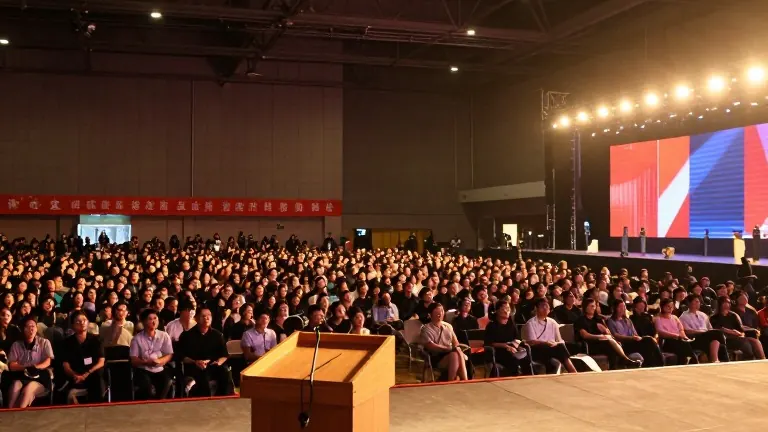
Vice President JD Vance stood before a crowd in Weatherford, Texas, on Thursday and launched a direct attack on Democratic Senate candidate James Talarico. Vance mocked the candidate for stating he had to grapple with his masculinity and whiteness. The vice president told the audience there was not much to grapple with, prompting cheers. The moment highlighted the tone of his current speaking circuit, which mixes political sniping with a specific vision of American history.
Vance delivered this speech the same afternoon President Donald Trump addressed supporters in Rock Hill, South Carolina. Both leaders are on a pre-midterm rally schedule to energize their base. While Vance’s delivery was more measured than the president’s, the core messages shared a familiar populist DNA. His speeches focus on a return to a perceived era of national unity and economic stability.
In North Carolina, Vance invoked the sense of pride and fellowship Americans felt after the September 11, 2001, attacks. He connected that emotional memory to the current economic climate. He spoke of a time when local small businesses sponsored youth football teams. In Howell, Michigan, he recalled finding the names of those sponsors in his old jerseys. He noted that most of those businesses no longer exist. He blamed politicians in distant capitals who did not care about the consequences for workers in states like Michigan and Ohio.
This narrative frames Washington elites as corruptors of a traditional, harmonious society. Vance argues his brand of politics can restore that order. He leans into cultural themes, describing a past where working-class Black and white children played football together without worrying about skin color or privilege. He told a North Carolina crowd that this racial harmony existed well before the rise of the Black Lives Matter movement. This approach packages anti-woke sentiments in a more traditional and eloquent style.
Vance is also experimenting with a more casual demeanor. He has occasionally used profanity and told the Texas crowd he was sweating profusely at the podium. This crassness contrasts with his generally polished political image. It suggests he is testing different rhetorical tools to see what resonates with voters as he prepares for a potential 2028 presidential bid.
The vice president faces a specific challenge: supporting Republican candidates while the unpopular president he serves remains a central figure. This tension is evident in how he handles economic pain caused by executive policies. Vance rarely mentions the Iran War in his stump speeches, even though the conflict drove up gas and diesel prices. Instead, he frames high fuel costs as a recurring geopolitical issue. He told a Montana audience that gas prices skyrocketed in 1979, 2001, 2007, and 2022, usually when a dictator throws a tantrum.
He applies a similar strategy to the high price of beef. Vance attributes the cost to consolidation among meatpackers. This explanation sidesteps the fact that Trump’s own policies have angered beef producers. By shifting the blame to corporate structures or global events, Vance attempts to shield the administration from direct criticism.
Vance’s appearances as head of the president’s anti-fraud task force provide additional material for his speeches. He uses the role to share personal anecdotes about working in a grocery store and benefiting from federal food assistance programs. In Cincinnati, he recalled working at Dhillon Foods and how his family used food benefit programs. These stories allow him to speak personally about economic difficulty and military service, topics where he has a distinct advantage over the president.
The central question for the 2028 cycle is how a candidate can follow Trump’s unique performance. Trump’s appeal has historically relied on bombast and unfiltered anger rather than biographical relatability. Vance is testing whether a more traditional populist message can fill that space. His current tour offers a clear preview of that potential campaign strategy.