Pakistan Ratifies Mecca Pact
The move strengthens the kingdom's security shield while Turkey finalizes its own domestic approval.
By Leila Reynolds ·
For residents in Saudi Arabia, the security landscape has shifted noticeably in recent days. The kingdom has faced renewed threats from Yemen's Houthis, prompting officials to issue warnings about potential dangers in specific southwestern areas. This heightened alertness comes just as a new layer of international support is being formalized to help protect the region.
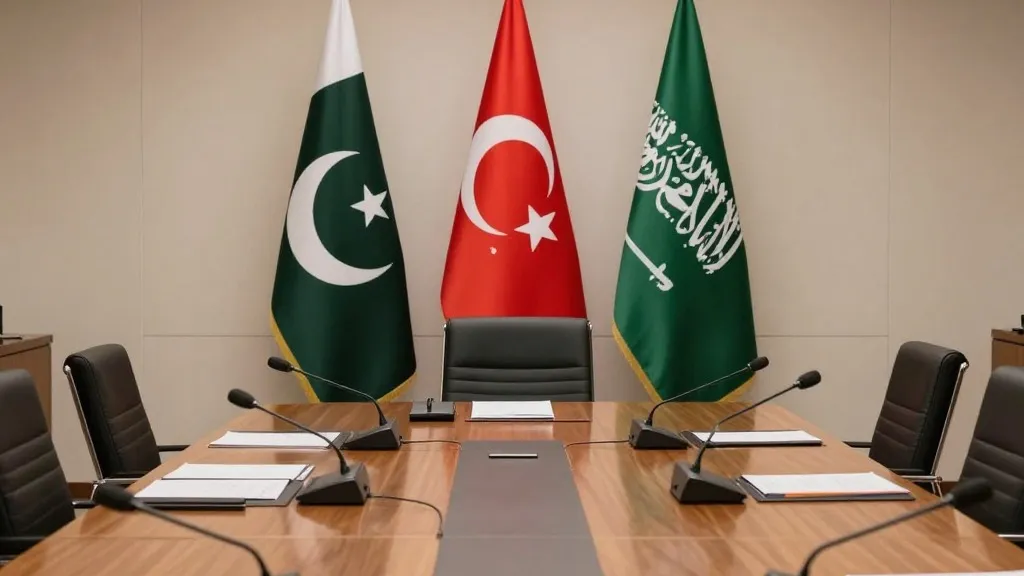
Pakistan announced on Friday that it has officially ratified a joint defence pact with Turkey and Saudi Arabia. This step marks a significant milestone in the implementation of the Mecca Joint Defence Agreement. The signing ceremony took place in Mecca on August 7, attended by Turkish President Recep Tayyip Erdogan, Pakistani Prime Minister Shehbaz Sharif, and Saudi Crown Prince Mohammed bin Salman.
Sajjad Haider Khan, a spokesperson for the Foreign Office, confirmed that both Islamabad and Riyadh have completed their respective ratification procedures. He noted that discussions regarding the agreement's operational details are ongoing among the three parties. However, the pact is not yet fully active because Turkey is still working through its own domestic approval process.
The core of the agreement provides for collective defence if any of the three nations faces an external armed attack. The level and nature of assistance will be determined based on the specific circumstances of the event. Pakistan has characterized the pact as strictly defensive and aligned with the United Nations Charter. Following a meeting of the Strategic Political and Defence Committee on October 5, the three nations agreed to deploy military forces rapidly in Saudi Arabia when needed, subject to each country's internal laws.
The timing of this announcement coincides with a period of regional tension. Saudi Civil Defence issued warnings this week about possible dangers in Abha and Khamis Mushait. While authorities later stated that the immediate danger had passed, they advised residents to follow safety instructions and avoid gathering in those areas. Officials did not specify the exact nature of the threat, though the alerts aligned with Houthi missile and drone strikes on the kingdom.
Reports from Reuters indicate that Saudi allies are primarily providing defensive support as the kingdom works to protect its infrastructure. Meanwhile, broader regional dynamics are also influencing the situation. The Israeli military announced large-scale exercises for Sunday and Monday involving air force units and commands from the north and center of the country. These drills will rehearse scenarios involving surprise air and land attacks to test readiness against multiple fronts.
These military preparations are occurring as Washington and Tel Aviv consider renewed actions against Iran. President Trump stated on Friday that the United States might conduct another military operation as the conflict approaches its eighth month. A report by The Business Times, citing US officials, suggests that American and Israeli forces have prepared plans for fresh strikes after the US midterm elections on November 3. Potential targets include Iranian energy infrastructure, nuclear facilities, and missile capabilities.
For now, the focus remains on how the three-nation pact will be operationalized. The ratification by Pakistan and Saudi Arabia removes two of the three necessary approvals, bringing the agreement closer to full effect. The coming weeks will likely see continued discussions on logistics and rapid deployment protocols, ensuring the alliance can respond effectively to any emerging security challenges in the region.