Israel Seeks $5 Billion Annual Budget for Independent AI Network
Officials warn that foreign control over AI models could disrupt hospitals and power grids, prompting a push for domestic hardware and data centers.
By Ivan Dvorak ·

Israel currently lacks the electrical capacity to power its proposed artificial intelligence infrastructure, requiring a jump from 1.5 gigawatts to approximately two gigawatts. Erez Askal, head of the National AI Directorate, outlined these needs on Monday at the AI Week conference at Tel Aviv University. His directorate operates within the Prime Minister’s Office.
Askal warned that public services are becoming reliant on AI. He predicted that energy networks, water systems, and hospitals will use AI within five to seven years. He argued that relying on overseas providers exposes Israel to commercial priorities that may not align with national interests. He stated that neither the United States nor China can guarantee uninterrupted access to AI models indefinitely.
The urgency of the warning stems from a specific event in June. American developer Anthropic temporarily limited access to its powerful Mythos models. This move complied with a US Department of Commerce order regarding national security. The episode demonstrated how quickly access to advanced AI can be withdrawn.
Askal detailed a strategy for sovereign AI infrastructure. The plan requires investment in electricity, computing resources, a national model, quantum computing, and workforce training. He identified three goals: maintaining technological sovereignty, improving residents’ quality of life, and contributing to international AI development. The strategy aims to secure control over essential services.
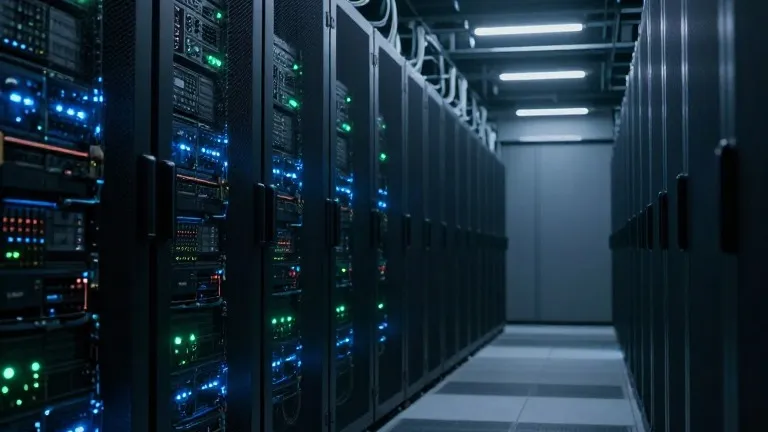
The hardware requirements are specific. Israel targets roughly 300,000 graphics processing units. About 100,000 would support domestic users in academia, public services, defense, and startups. The remaining 200,000 would help technology companies and data centers expand in the country. These processors handle data at speeds beyond ordinary computers, aiding complex simulations in transport, medicine, and drug discovery.
The financial cost of this multiyear strategy is estimated at $2 billion to $5 billion annually. No funding has been committed yet. Askal said cooperation with allies could help, but the effort demands extensive data, financing, and time. The plans arrive as countries compete to build AI and quantum computing capabilities for national purposes.
Nvidia chief technology officer Michael Kagan also spoke at the conference. He placed Israel alongside the United States and China at the forefront of AI. Kagan noted that Israel’s standing reflects its technological capabilities rather than its population size. He added that Nvidia chips are either designed entirely in Israel or developed with the involvement of Israeli teams.