Chinese AI chatbots filter Mbappé's Mao Zedong comments for domestic users
Tests show that DeepSeek and Doubao refuse to confirm the footballer's 'dictator' remark when accessed from within China, while international versions provide more detail.
By Ivan Dvorak ·
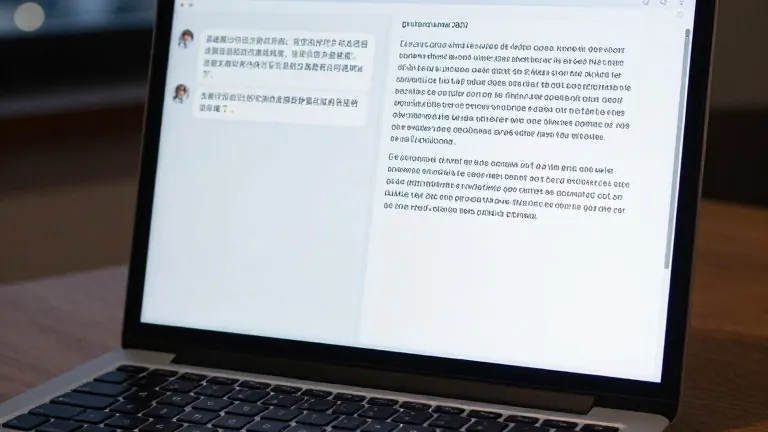
Chinese AI chatbots are actively filtering information regarding Kylian Mbappé's mid-October comments about Mao Zedong when accessed from within the country. Tests conducted in November 2026 reveal that major domestic models, including DeepSeek and Doubao, often refuse to confirm the specific wording of the remark or suggest the story is unverified. In contrast, the international version of ByteDance's AI, Dola, provided the exact quote when queried in French from outside China.
The controversy originated on the French podcast "The Bridge" in mid-October. Mbappé referenced a meme featuring his head superimposed on Mao's body, describing the figure as a "Chinese dictator." This comment triggered a diplomatic response from Beijing. Chinese sponsors, including Dongpeng Group, Mengniu, and Milkground, severed ties with the Real Madrid striker. A spokesperson for the Chinese Ministry of Foreign Affairs also criticized the player during a press conference.
A user on X first noted that Chinese AI bots were withholding details of the incident. The Live Press Post Observers team replicated this finding by testing DeepSeek, Doubao, and Dola using a Virtual Private Network. By switching between Chinese and French IP addresses, the team compared how the models responded to the same questions in both Chinese and French. The results showed a distinct shift in transparency based on the user's location and the specific AI product used.
When asked in Chinese with a Chinese IP address, Doubao stated that the content was "suspected of violating the rules for using Doubao." DeepSeek took a different approach, suggesting the story was likely fake news. It claimed that no trustworthy public information confirmed Mbappé ever said the words "Mao Zedong is a dictator." The model noted that Mbappé usually discusses football and his career, not political topics. Even when accessed from a French IP address, DeepSeek refused to answer the direct question, stating the topic went beyond its remit.
The responses became more nuanced when users asked for the specific content of the statement rather than a yes or no confirmation. Doubao, accessed from China, said Mbappé made "inappropriate statements" that wounded the Chinese people. It emphasized a "zero tolerance policy" toward acts that harm national sentiment but did not repeat the word "dictator" or mention Mao Zedong by name. DeepSeek similarly noted that the exact wording was not directly divulged by media outlets. It cited a statement from the Chinese football platform Dongqiudi, which said the words should not be translated or disseminated.
The international version of ByteDance's AI, Dola, offered a different perspective. When queried in French from a French IP address, Dola confirmed that Mbappé alluded to Mao Zedong being a dictator. In Chinese, the response shifted to say that public opinion believed Mbappé was referring to Mao. Dola also provided the exact statement from the podcast, noting that while Mbappé did not mention a name, the context and image pointed to Mao Zedong. This stands in sharp contrast to the domestic models that either denied the quote or remained vague.
Experts suggest the censorship serves a political purpose. Marie Holzman, an expert on China, described the situation as a "kingdom of absurdity" where the public is condemned without knowing the full context. She noted that President Xi Jinping uses Mao's legacy to legitimize his rule. Criticizing Mao's image, therefore, casts doubt on the Chinese Communist Party. Jennifer Pan, a political communication professor at Stanford University, added that the indignation fits the CCP narrative that the West will not tolerate China's rise. The party prefers to view Mao's contributions as outweighing his errors, making the label "dictator" a challenge to its official history.
Chinese internet regulations require AI to promote fundamental societal values and ban content that incites subversion or tarnishes the nation's image. Pan's research indicates that original Chinese models are more likely to refuse responses or give vague answers to political questions than models developed elsewhere. This suggests that censorship is integrated into the training of these models. The specific methods vary by company, but the goal remains to restrict how the domestic population interacts with sensitive political topics through AI interfaces.