Inflammatory Breast Cancer: New AI-Driven Initiative Targets Undetected Disease
Researchers at UT Austin and UT MD Anderson are combining engineering and machine learning to develop therapies for a rare, aggressive cancer form.
By Leila Reynolds ·
Inflammatory breast cancer presents a diagnostic challenge because it frequently lacks the physical lumps associated with other breast cancers. This absence of tangible symptoms often leads to misdiagnosis as mastitis, an inflammation of breast tissue common during breastfeeding. By the time the condition is correctly identified, the disease has often metastasized, limiting treatment options. The rare form accounts for only 1% to 5% of all breast cancer cases, yet it remains one of the most aggressive variants.
To address this gap, the Collaborative Accelerator for Transformative Research Endeavors has launched a project named TRIUMPH-IBC. The initiative unites researchers from the University of Texas at Austin and UT MD Anderson Cancer Center. Bisrat Debeb, an associate professor at UT MD Anderson, notes that early detection is paramount for improving outcomes. However, current screening methods struggle with this specific type, prompting the need for a multidisciplinary approach spanning engineering, biology, and computational science.
The collaboration begins with clinical identification. Debeb works alongside Wendy Woodward, a breast radiation oncologist who directs the Morgan Welch IBC Clinic, the first clinic in the world dedicated specifically to inflammatory breast cancer. Their team identifies specific proteins and molecules that facilitate cancer growth. These findings are then transferred to the University of Texas team, which includes experts from the Cockrell School of Engineering and the College of Natural Sciences. Their objective is to bioengineer targeted therapies that improve patient outcomes efficiently.
Annalee Nguyen, a research assistant professor in the McKetta Department of Chemical Engineering, focuses on the side effects of treatment. She aims to develop therapies that control cancer spread while preserving patient quality of life. Nguyen highlights the difficulty of watching loved ones suffer from both the disease and the harsh effects of chemotherapy. Her goal is to make therapeutics more tolerable so patients can stay on their treatment regimens.
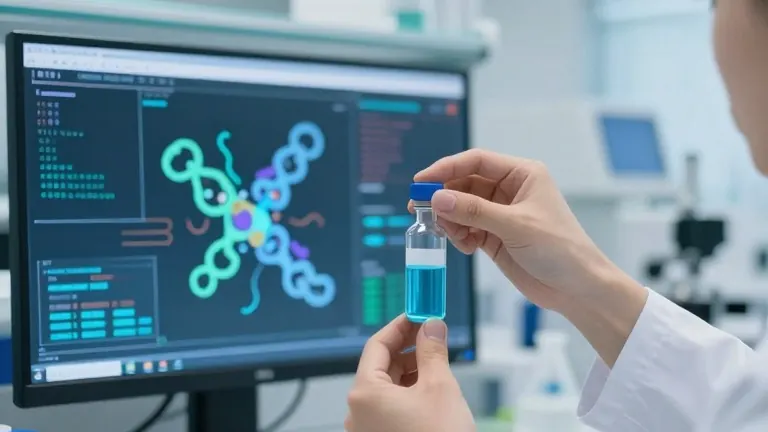
To determine which treatments are most promising, the team uses a threefold approach involving machine learning. Adam Klivans, director of the UT Institute for Foundations of Machine Learning, leads the computational side of the project. His team uses AI tools to analyze large datasets and streamline the selection of therapies for clinical trials. Klivans states that their role is to develop custom AI tools that generate potential protein binders for researchers to test. This process aims to accelerate the discovery of new therapeutics for inflammatory breast cancer.
Research in Debeb’s lab has already begun identifying specific biomarkers relevant to brain metastasis. The team is studying miR-141 and NDRG1, molecules that may act as suppressors or drivers in the spread of aggressive cancers. While the project focuses on breast cancer, these findings have implications for understanding how cancer cells survive in the brain. Jennifer Maynard, chair of the McKetta department, and molecular biologist Everett Stone are also contributing to the development of protein-based solutions.
Debeb emphasizes that the collaboration is designed to move discoveries from publication to practical application. He states that the goal is not simply to make interesting discoveries but to turn the most promising ones into patient care. The team views their work as a collective effort, with each discipline contributing a different piece of the therapeutic development process. This structure ensures that biological insights are rapidly translated into engineering solutions.
During Breast Cancer Awareness Month, the researchers prioritize public communication to improve prevention efforts. Debeb believes that identifying the signs of various breast cancer forms is a key step in increasing awareness. He views the progress made by the team as belonging to the broader community. His responsibility, he says, is to turn that collective investment into discoveries that improve patients' lives. The project continues to develop tools that could eventually lead to new vaccines and therapeutics.