Gas prices hit by Iran war could weigh on Republican midterms
A Reuters/Ipsos poll shows 78% of Americans blame President Trump for rising prices as the U.S. and Israel continue a conflict that began in late February.
By Ivan Dvorak ·
Midterm elections are scheduled for next week, and a war that began in late February is now shaping the political landscape in the United States. The conflict between the U.S., Israel, and Iran has driven up oil prices, a trend that is visibly affecting American consumers at the pump. This economic pressure is creating a direct link between foreign policy decisions and domestic voter sentiment, a connection that political analysts say is unusual for this type of election cycle.
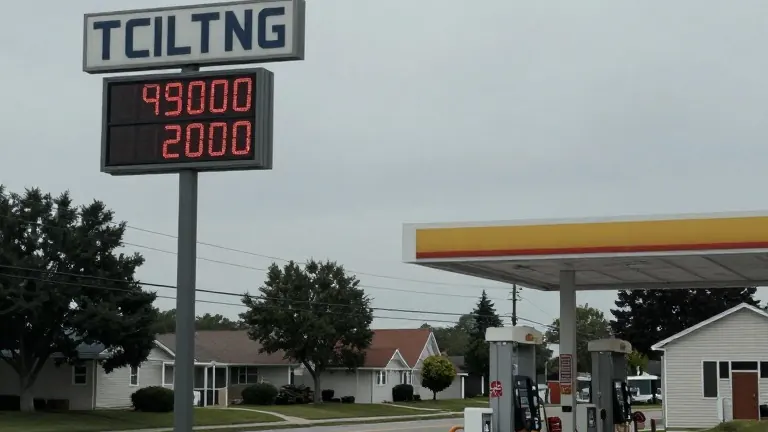
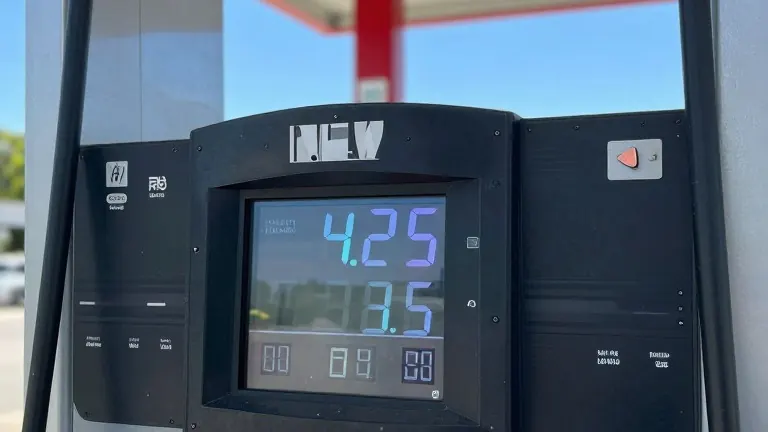
When U.S. and Israeli jets struck hundreds of targets across Iran on February 28, killing much of the country's leadership, the global oil market reacted immediately. The price of oil was $67 per barrel on February 27. By March 1, it had jumped to $99 per barrel. That level has remained steady for the eight months since the conflict started. According to data from the American Automobile Association, the average price of gas in the U.S. climbed from $2.98 per gallon to $4.25 per gallon as a result.
Clifford Young, chair of Ipsos Public Affairs, noted that foreign policy is often distant to voters who focus on their pocketbooks. However, he observed that Americans are now explicitly connecting high fuel costs to U.S. actions in the Middle East. Young stated that these decisions have significantly impacted Trump's political base. He described the situation as a decision that eroded the president's domestic political capital.
A Reuters/Ipsos poll published in early October found that 78 percent of respondents blame Trump's policies for rising prices generally. The war has become increasingly unpopular, with a Pew Research Center survey showing that nearly two-thirds of Americans disapprove of the conflict. This disapproval is growing among Republicans and Republican-leaning independents, who previously rallied around the president's America First agenda. That agenda included a promise to extricate the country from foreign conflicts.
The administration initially said the war would last four to six weeks. Despite a strong military display, the conflict has persisted. Aaron David Miller, a senior fellow at the Carnegie Endowment for International Peace, criticized the strategy. He said the war was launched without sufficient thought to the administration's capacity to reach its objectives. Miller argued that the U.S. underestimated the adversary's ability to escalate and target vulnerabilities in the Strait of Hormuz.
While the Iran war is a major factor, other foreign policy events have occurred. U.S. forces recently captured Venezuelan President Nicolás Maduro, who now faces federal charges in the U.S. The administration has also worked with Interim President Delcy Rodríguez. In Gaza, the U.S. helped secure the release of remaining hostages and brokered a fragile ceasefire between Hamas and Israel. Additionally, Washington lifted sanctions on Russia in an effort to lower oil and diesel prices.
A recent Marist/NPR/PBS News poll found that foreign policy is the top issue for only 5 percent of Americans. In contrast, 34 percent cited the cost of living as their primary concern. This creates a convergence of issues where the decision to start a war is viewed through the lens of daily affordability. Republicans currently hold a four-seat majority in the Senate, where 33 seats are up for grabs. Polls predict Democrats will take control of the House, while the Senate remains too close to call.