168 Million Rials: The New Cost of a Basic Food Basket
Inflation at 89.9 percent forces Tehran households to split meals and abandon savings as the rial weakens.
By Pedro Barnes ·
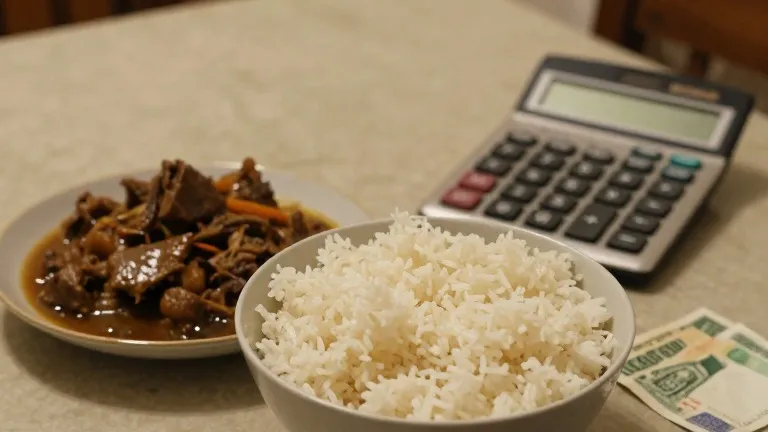
For a family of three in Iran, a basket of eleven essential food items now costs 168 million rials, or approximately $61.70. This price point marks a sharp increase in basic survival costs, forcing many households to cut back on meat, dining out, and long-term savings. The financial strain is visible in daily routines, where families prioritize immediate nutrition over future security.
The cost of living in Tehran has risen due to a combination of international sanctions, persistent inflation, and a weakening currency. The United States and Israel launched a war against Iran on February 28, which damaged infrastructure and disrupted trade. A US naval blockade reduced oil exports and imports, while Iranian attacks in the Strait of Hormuz hindered shipping. In August, the US Treasury initiated a new sanctions campaign labeled "Economic D-Day" to further isolate the economy.
A field survey by Radio Farda in central Tehran shows that middle-class activities are disappearing. The price of cooking a meal of ghormeh sabzi, a traditional herb stew, is now 23 million rials, while potato patties cost 4 million rials. Chicken and barberry dishes cost nearly twice as much as they did a year ago. Families are adjusting their shopping habits to determine which necessities can be skipped.
Abdolnaser Hemmati, the central bank governor, acknowledged on October 23 that Iranians are bearing a "heavy burden." He stated that efforts to isolate the country's economy had failed to achieve their main objective. His remarks come as annual inflation reached 89.9 percent in September. The monthly wage in Iran is estimated at around $100, while the government's food voucher covers less than 18 percent of the per-person food cost.
The government food voucher, worth 10 million rials, covered about 30 percent of costs in December 2025. It now covers a smaller share of the 56 million rial per-person food basket. Factnameh, a fact-checking outlet based in Canada, calculated these figures for September. The reduction in voucher coverage means families must cover more of their basic needs with their own income.
Households are changing who eats meat. One woman reported that her family saves meat and chicken for their children to support their growth. Her husband and she consume legumes and meat substitutes. They fear that further price increases will eventually force them to remove meat from the children's diets as well. This shift reflects a broader trend of prioritizing protein for younger family members.
Higher earners are also adjusting their spending. A middle-aged man in western Tehran earns a billion rials per month from his salary and rental income, exceeding the average Tehran household income of 600 million rials. Despite this higher income, he has no savings for the future. He stated that travel, dining out, and saving have disappeared from his life. A 28-year-old woman earning 400 million rials monthly now splits dishes with friends at cafes to afford social outings.