
Warhound Raises $200 Million for Genetic Military Dogs
The startup founded by Palmer Luckey plans to use gene editing to improve canine detection capabilities, with Colossal Biosciences assisting in the biological work.
By Pedro Barnes ·
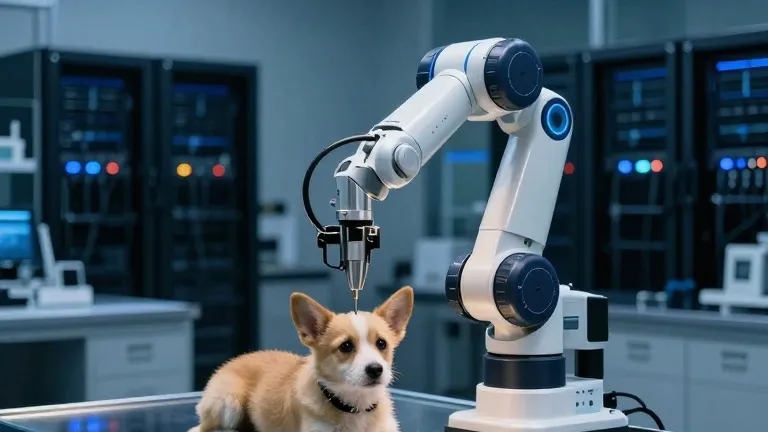
A startup called Warhound has secured $200 million in funding to develop genetically modified dogs for military applications. Reports released on October 23, 2026, state that the company intends to enhance the animals' ability to detect explosives and provide protection for troops. The funding round included investment from Sequoia. Colossal Biosciences is collaborating with Warhound on the cloning and gene editing aspects of the project.
Warhound is led by Palmer Luckey, the founder of Oculus and Anduril Industries. The company’s specific goal is to create canines with biological advantages for combat zones. The financial backing allows the firm to advance its research into modifying dog genetics for these specific military tasks. No other details regarding the timeline for deployment or the specific genes targeted have been publicly confirmed.
In separate health developments, Moderna and Merck announced that their mRNA cancer vaccine reduced deaths by 42 percent. The trial results showed a lower risk of recurrence for patients with melanoma. Additionally, researchers reported that prime editing, a precise gene-editing tool, has reached its first human patient. This technique rewrites DNA directly within liver cells.
Cybersecurity experts noted that newly disclosed flaws in PHP have not yet resulted in successful attacks. While the vulnerabilities caused websites to go offline globally, analysts said they are more difficult to exploit than initially feared. Developers have urged operators to apply patches. Ian Landsman, a software developer, credited volunteer Ondrej Sery for patching PHP, calling him an unsung hero of the internet.
In energy news, Google is launching a virtual power plant that pays customers to adjust their energy use to free up power for data centers. A separate report indicated that the company felled 250,000 trees in Finland for a data center, an action described as illegal. Climate scientists also suggested that fossil fuels may have delayed the next ice age by reversing 2,000 years of ice growth.
Political figures exchanged statements regarding Starlink connectivity in Ukraine. Donald Trump said Elon Musk had restored access, while President Volodymyr Zelensky stated that speeds remained capped. The Wall Street Journal reported that Trump asked Musk to lift those speed limits.
MIT Technology Review published its Impossible issue, which evaluates six technologies often described as imminent. The topics include decoding pet vocalizations, removing forever chemicals, and nuclear-powered spaceships. The publication plans to examine these subjects in upcoming days.