Serbia election: Student List targets 40% in tight race
Voters head to the polls as the first competitive contest in 14 years pits a student-led coalition against the long-ruling SNS.
By Leila Reynolds ·
Serbian voters go to the polls on Sunday to decide the fate of a government that has held power since 2012. The Student List, a coalition formed by a student movement protesting for nearly two years, aims for a decisive mandate. Analysts describe the election as the most competitive since the Serbian Progressive Party (SNS) took office.
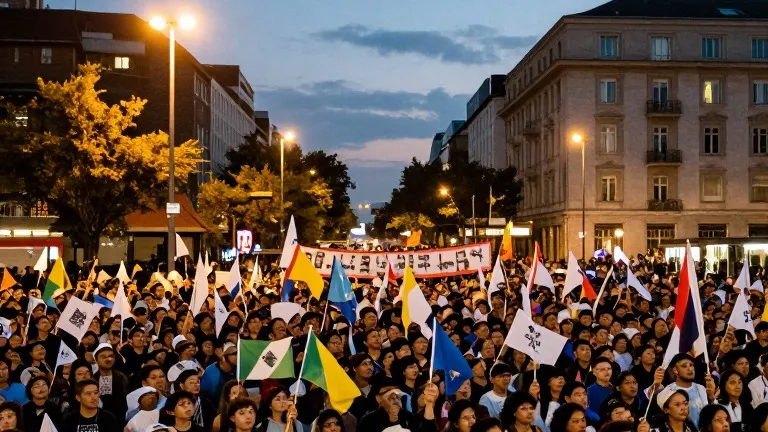
Thousands gathered in Belgrade on Thursday for the Student List’s final rally. Many attendees walked from across the country to the capital to show solidarity. Arsa Stojanovic, a biology student, told the crowd that the group had traversed Serbia and learned they could rely on the public. Aleksandar Cupic, a transport engineering professor and candidate, stated that the atmosphere "smells like freedom." The event concluded with a traditional circle dance known as a kolo.
The movement emerged after a concrete canopy collapsed at the Novi Sad railway station in November 2024, killing 16 people. The students frame the vote as a demand for accountability and a break from traditional ideological divisions. Dusan Spasojevic, a political scientist, told DW that polls suggest the Student List could win more than 40% of the vote. He noted that the outcome is uncertain, a rarity in the current political climate.
The SNS held its own closing rally nearby, emphasizing stability and continuity. Former President Aleksandar Vucic accused opponents of attacking the party with billions of euros and serving foreign interests. He warned that a change in government risks chaos and a loss of sovereignty.
Tensions have risen throughout the campaign. The independent monitoring group CRTA recorded 116 incidents of violence or threats by the final week. These included physical attacks on campaigners and attempts to seize banners. CRTA reported that opposition activists faced surveillance and that police were slow to protect them. The group stated that the campaign was not free or fair, noting that government representatives received nearly three-quarters of national television airtime.
Anonymous sources told DW that some voters were offered between 30 and 150 euros, or family holiday packages, to support the SNS. The Balkan Investigative Reporting Network also published testimony about pressure on public-sector employees. Authorities have warned of potential street violence on election night, with several arrests made for suspected plots. Spasojevic said a narrow victory for either side could lead to a post-election crisis, with the Student List vowing to defend every vote.
An EU Commission spokesperson said that key recommendations on Serbia’s electoral framework remain unimplemented. The spokesperson stressed that democracy and the rule of law are central to Serbia’s accession process, for which the country has been a candidate since 2012.