Divided Government Faces Economic Storm
With inflation at 3.7% and the debt service costing over $1 trillion, the new congressional majority and the White House must navigate a tight fiscal squeeze.
By Leila Reynolds ·
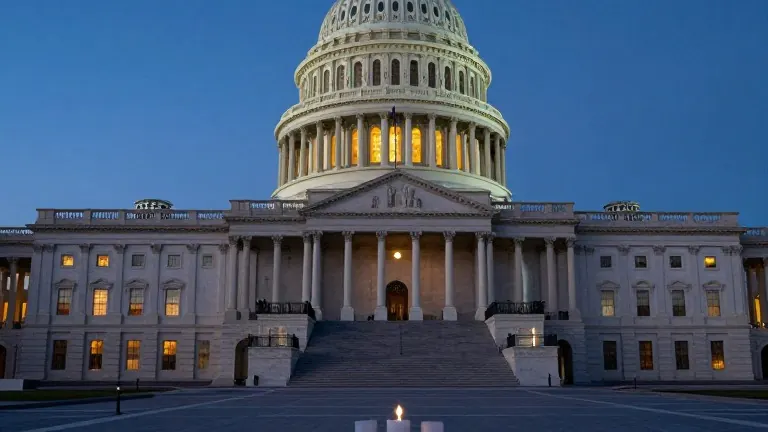
The United States enters a new political era defined by a hard economic reality. President Donald Trump and the incoming Democratic congressional majority now share control of the levers of power, yet they face a consumer price index that rose 3.7% annually and a federal debt service bill that now exceeds one trillion dollars a year. The midterm results have created a gridlock that forces both sides to confront the cost of living before the next election cycle.
This confrontation began in February when Trump launched a war against Iran and implemented new tariffs. Those actions contributed to the current inflation rate. By August, the White House promised a fiscal consolidation plan to address the roughly $2 trillion annual deficit. Now, with Democrats holding the House and Senate, the pressure to act has intensified. The political landscape has shifted from a single-party mandate to a shared burden of repair.
Trump’s initial reaction to the election results was defensive. He had warned on the campaign trail that a Democratic takeover would trigger a 1929-style depression. Instead, he struck a defiant tone after a jobs report showed employers adding 165,000 positions and the unemployment rate dipping to 4.1%. "Democrats may control Congress, but I will NEVER stop fighting for you, and I will VETO anything that hurts America," he wrote in a text message to supporters. He signaled a willingness to cooperate, telling reporters last week, "I'll get along, probably, with the Democrats, unless they want to be destructive."
Democrats are preparing to test that willingness immediately. They plan to fight over government spending, chronic budget deficits, and tariffs. The central bank, the Federal Reserve, may become an unexpected beneficiary of this tension. Analysts suggest the new gridlock could give the Fed more room to guide inflation back to its 2% target, a goal it has missed for nearly six years. Douglas Holtz-Eakin, president of the American Action Forum, noted that a Democratic Senate could block Trump's nominees to open Fed board seats. This would allow Chair Kevin Warsh to aggressively reduce inflation without political interference.
The debt crisis adds urgency to these negotiations. Interest payments now top $1 trillion a year, a figure that exceeds military spending. Investors have already pushed up rates on government borrowing. Neither party campaigned on spending cuts, creating a dilemma. Trump seeks an additional $500 billion annually for the military, while Democrats want to restore Affordable Care Act subsidies that lapsed under his administration. Treasury Secretary Scott Bessent and White House budget director Russell Vought are working on a plan to trim the deficit. Marc Goldwein, senior vice president at the Committee for a Responsible Federal Budget, said real deficit reduction would likely require both tax increases and spending cuts, with lower Medicare costs being the easiest target. "It's not rocket science," he said.
Artificial intelligence presents another layer of complexity. Harvard economist Jason Furman calls it the nation's most pressing economic issue, comparing the current investment boom to the railroad era. His analysis tool, Econvitals, found an 80.6% jump in data center construction over the past year while spending on homes, schools, factories, and offices fell. Stocks sold off last week on fears that Democrats might restrict data centers. Trump has championed the sector and resisted new regulation, but Furman warns that a single strength in an economy is also a big vulnerability.
The most immediate structural threat involves Social Security. The program is projected to be unable to pay full benefits after 2032. Options such as lifting the cap on payroll taxes or raising the retirement age require bipartisan support because the program cannot be overhauled through party-line reconciliation votes. Sen. Elizabeth Warren of Massachusetts said she reached out to Sen. Bernie Moreno of Ohio within days of hearing him discuss lifting the payroll tax cap. The two are developing legislation. Warren noted that checks sent to seniors will drop by nearly a quarter after 2032 and added of the millions who depend on those benefits: "And Congress is doing nothing."
The next few months will define the trajectory of the American economy. The White House and the new congressional majority must agree on a path forward while the Federal Reserve works to lower rates. The fiscal consolidation plan promised in August will be the first major test of their cooperation. Investors are watching the interest rates on government borrowing, and voters are watching their household budgets. The numbers are on the table, and the time for debate is ending.
More Politics · National news · Report a business · Got a Story?