Breaking: RTX Pro 6000 Economics Behind Anthropic's Massive IPO Valuation
A single high-end graphics card can serve a limited number of heavy users, creating a ten-month payback period that underscores the compute bottleneck driving the company's financial structure.
By Pedro Barnes ·
Anthropic, the maker of the Claude models, is preparing to go public in an initial public offering that it projects at a valuation between 2.5 trillion dollars and 3 trillion dollars. This figure stands in stark contrast to the company's current financial reality, which includes a deficit of about 500 billion dollars and annual revenue of less than 20 billion dollars. The company also carries compute commitments to other companies, including Amazon and Google, of up to 900 billion dollars. This massive gap between the projected valuation and actual revenue raises the core question of how a company that loses 500 billion dollars can be worth 2.5 to 3 trillion dollars. The answer lies in the underlying economics of the hardware that powers the models.
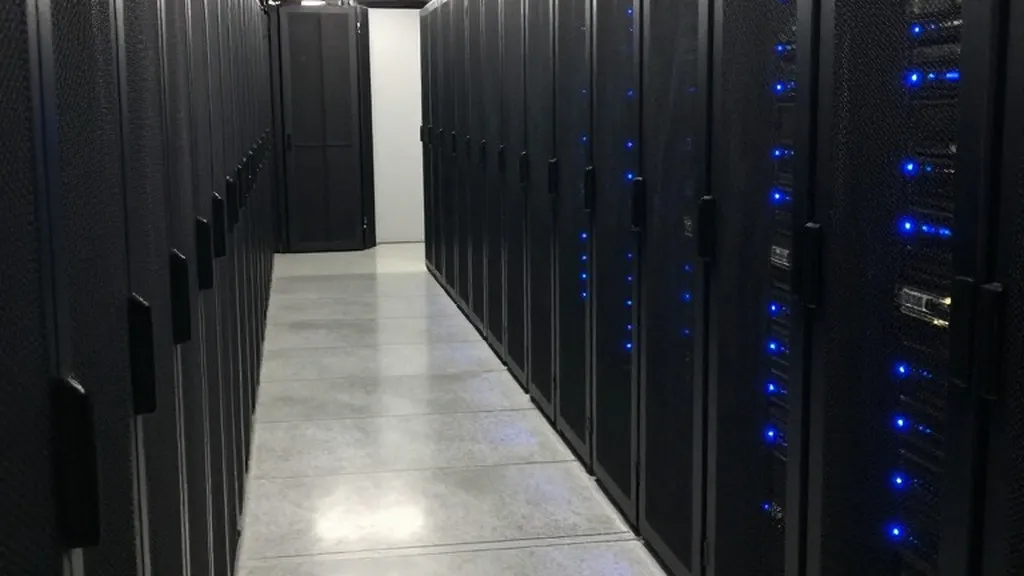
The central bottleneck for these AI companies is the availability and cost of graphics processing units. Nvidia drives demand up and lowers supply, giving all its supply to the large players like Anthropic, Grok and OpenAI, leaving the consumer market to fit the bill. A single Nvidia RTX Pro 6000 graphics card retails at 20,000 dollars as of now. This price does not include the servers, switches, CPUs and processors needed to run the machines, the data center facility costs, or the electricity required to keep them running. For investors and operators, the raw cost of the silicon is the primary variable in calculating profitability.
The serving capacity of this hardware is strictly defined by the intensity of usage. A single RTX Pro 6000 card can hold about 15 to 20 light users running light compute at about 60 to 70 tokens per second. Alternatively, it can support 1 to 2 heavy coding users running Claude Code at about 40 to 50 tokens per second, assuming constant use 24 hours a day. Each heavy user on the max plan pays 200 dollars a month, while each light user pays about 20 dollars a month on average for a base plan. These usage patterns determine how many subscribers a single piece of hardware can support before the system becomes saturated.
When analyzing the return on investment, the wholesale price of the card becomes a critical factor. Buying the cards from Nvidia direct at a wholesale price of 3,000 to 4,000 dollars, the GPU alone takes about 10 months of a heavy 200 dollar a month user to pay back. It takes about the same amount of time for the 15 to 20 light users at 20 dollars a month to cover the cost of the card. This roughly 10 month payback period is the baseline for the hardware cost, excluding the massive overhead of data center operations and power consumption.
Most light users will not use the chat for more than a few hours a day, so the bandwidth number can stretch 10 times. However, the breakeven and acquisition cost stays huge for the provider. This economic structure forces companies to maximize the number of users per card to dilute the fixed costs. It also means that the margin on a single user is thin, requiring scale to generate meaningful revenue. The compute and GPU bottleneck is a real problem for these companies, and the cost of entry for new providers remains prohibitive without direct access to Nvidia's supply chain.
Nvidia agreed to acquire Hugging Face, the platform where most open AI models are distributed, for 12.9 billion dollars. Hugging Face makes about 150 to 200 million dollars a year in its peak years, so the 12.9 billion dollar price is about 70 times its revenue. While 12.9 billion dollars is pocket change for Nvidia and its CEO Jensen Huang, the stated reason was CUDA, the software that runs all these models. The deeper reason was control of the distribution of models on the market, especially the open source market, which had become a significant competitive threat.
The open source market is being flooded by advanced Chinese models, including Kimi from Moonshot AI, DeepSeek, Qwen from Alibaba, and models from Xiaomi. These companies are willing to give the models over to the public to increase innovation. Kimi K3 started to outperform the Opus 5 models from Anthropic, and it was given to the public. The internet used these large language models, quantized them down, and made them usable on smaller machines like Mac Studios, A100 cards and RTX Nvidia models. This democratization of access allowed smaller players to compete with the major proprietary labs.
After Nvidia acquired Hugging Face, advanced models were deleted from distribution. Anything over a quant 4, meaning advanced and capable of beating out Claude's models, was removed. The 4 bit, 6 bit, 8 bit and 16 bit full sized models were banned from the Hugging Face platform. Developers on Discord rallied to stop the censorship and corporate overreach, and they opened Pirate Face, a place where you can upload and download all models. However, this happened not before the large 400 gigabyte models at quant 3 and higher were scrubbed from the network.
Anthropic demanded that Congress ban Chinese models because of national security, when the real goal was to control the market. Anthropic recently did a publicity stunt: it released and circulated media that AI will take over the world when one of its disgruntled employees, Jacob Coxon, quit amidst his disappointment in AI. The goal was to get the government to pass bills banning models that were a huge threat to Anthropic's bottom line. The panic worked: Congress passed a bill that now bans any government and its affiliates from using any Chinese models. Anthropic is trying to pass bills that would stop other companies like Verizon and other networks from launching their own AI models in house by using these advanced open source models.