Breaking: AI Reckoning: Markets Crash as Tech Leaders Admit Surprise
Investors wiped out trillions in value on Thursday as fears over artificial intelligence valuations collided with political headwinds from the midterms.
By Pedro Barnes ·
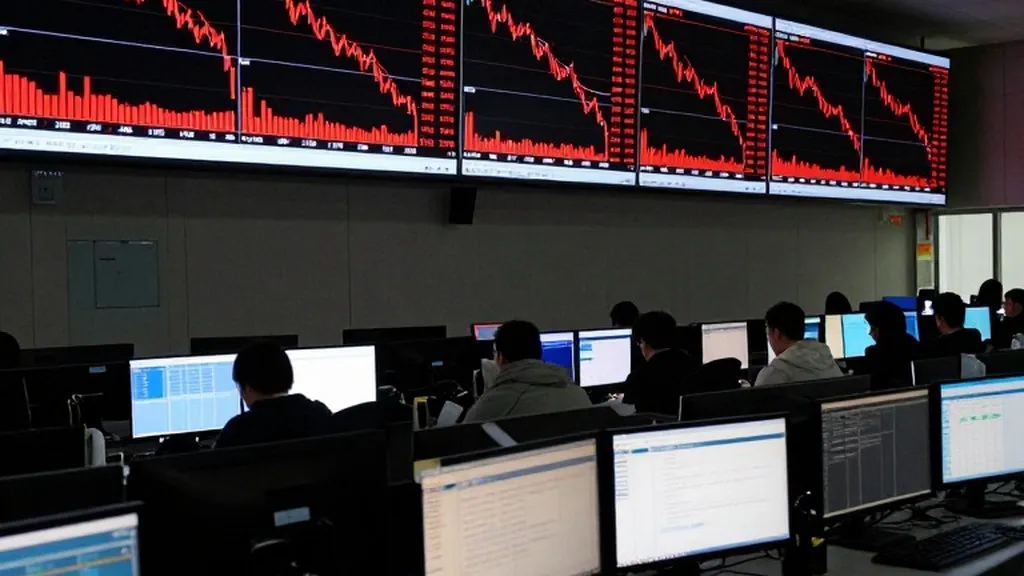
The AI reckoning arrived with full force on Thursday, erasing the optimism that had characterized the post-election rally and sending shockwaves through global markets. The Dow Jones Industrial Average fell more than 1,800 points, a drop of 3.4 percent, to close at 51,868. This sharp decline erased the gains made on Wednesday, when the index had seen its biggest daily gain of the year. The S&P 500 fell 4.3 percent, marking its worst day since April 2025, while the Nasdaq Composite dropped 5.5 percent, its steepest decline in 18 months.
The selling pressure was not limited to a few sectors but spread across the entire S&P 500, gathering pace as the day progressed. The Nasdaq closed more than 11 percent below the record it set last month, placing the index firmly in correction territory. An estimated $2.5 trillion in market value was wiped from the Nasdaq Composite. The so-called Magnificent Seven technology companies, which include Apple, Nvidia, and Tesla, shed about $1 trillion in value in the single trading day.
The turmoil was driven by a dual fear: the political impact of the Democratic midterm victory and the underlying valuation concerns in the artificial intelligence sector. Democrats in races across the country had campaigned on slowing the spread of data centers, and voters rejected data centers in a series of local ballots. In Texas, Democrat Gina Hinojosa won the race for governor after campaigning on an immediate moratorium on new data center construction. These victories heightened concerns that the facilities at the heart of the AI build-out will face new hurdles.
However, the market reaction suggests that the political trigger was merely the final blow to an industry already grappling with bubble worries. Susannah Streeter, chief investment strategist at Wealth Club, warned that fresh panic over the AI trade had hit Wall Street hard. She stated that fears that the vast sums poured into AI infrastructure may not deliver the returns investors have been banking on are now colliding with the prospect of a sharp slowdown in data center construction. This sentiment reflects a broader unease that the huge sums being spent on AI will not pay off.
The surprise of the backlash was palpable among industry leaders who addressed the disconnect between their expectations and the public response. Greg Brockman, president and co-founder of OpenAI, speaking at the WSJ Tech conference in Napa, California, said everyone had been surprised by the reaction to data centers. He noted that more work was needed to bring communities on board, stating, "A lot of our shift over the course of this year has really been to realise that from San Francisco trying to build infrastructure in Texas, Georgia, and other places, you can't just tweet and say: 'This is going to be good.' You need to be in those communities."
Dina Powell McCormick, president of Meta, echoed this sentiment at the same conference, emphasizing the need for the industry to put more effort into making the case for AI. She told the audience, "I think we need to double and triple down on telling the story." These admissions from top executives underscore the realization that the rapid expansion of AI infrastructure has faced significant public resistance, a factor that had not been fully priced into stock valuations prior to the election.
The market's fear gauge, the Cboe Volatility Index, jumped as much as 5.7 points to above 28 about 90 minutes after the opening bell, its highest reading since March 31, 2026. The VIX was up 61 percent on the day. By midday, nearly 800,000 VIX call options had traded, which is 3.5 times the 30-day average. The 10-year Treasury yield fell to 4.83 percent, its lowest since September, as investors bought bonds as a haven.
Chip stocks led the rout, with Nvidia falling 9.2 percent, the biggest faller in the Dow, losing more than $400 billion in market value. The Philadelphia Semiconductor Index fell more than 12 percent, and it has fallen more than 30 percent since the beginning of October. Ted Parkhill, founder and chief executive of Incline Investment Management, noted that the market's moving from the promise of AI to the price of AI. He added, "There's no question that AI is going to be transformative for the world in the long run. But that doesn't mean every AI-related stock is currently priced appropriately. There's going to be a lot of turmoil."
Despite the severity of the drop, some strategists see potential for a recovery. Gene Goldman, chief investment officer at Cetera Financial Group, said the sell-off had become exaggerated as selling accelerated through the day. He predicted a recovery, stating, "When you have a correction in a bull market they are typically short lived. It's ugly right now but we do think we will see a bounce back soon." Frank Cappelleri, founder of CappThesis, pointed out that the Nasdaq was higher 12 months after the election in all but one of 13 midterm cycles since 1974, though he cautioned that the path can be a volatile one.
More Business · Business Complaints · Report a business · Got a Story?