Ukrainian President Confirms Full Restoration of Starlink and Starshield Speeds
Connectivity returned to pre-restriction levels after a week of caps that hampered drone defense and military logistics.
By Leila Reynolds ·
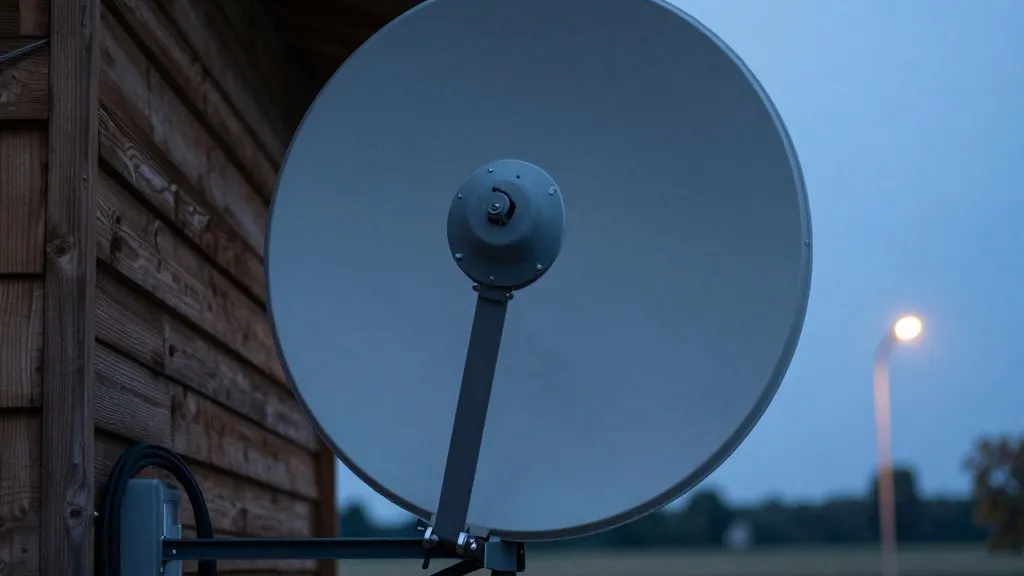
For soldiers on the front line and civilians relying on digital connectivity, the week-long uncertainty over satellite internet performance has ended. Ukraine announced on Saturday that both the commercial Starlink network and the military-focused Starshield system have returned to their previous high-speed operations. This change means that the severe data caps imposed earlier this month are no longer in effect, allowing for faster communication and more efficient drone control. The restoration was confirmed to begin overnight, marking a significant shift in the technical infrastructure supporting the country's defense efforts.
The path to this restoration involved a complex interplay between Washington and Kyiv that created tension over the past seven days. The slowdown initially capped speeds at approximately 100 miles per hour, a level that Ukrainian officials said significantly impeded their ability to intercept incoming drones and manage military logistics. Before the restrictions, speeds typically exceeded 250 miles per hour. The Defense Ministry stated that its monitoring systems now confirm that connectivity is stable and back to these higher benchmarks. This recovery is critical because the satellite network serves as the backbone for Ukraine's defense against Russia's full-scale invasion, facilitating everything from food and water delivery to real-time communications along the front.
Ukrainian President Volodymyr Zelenskyy took to social media to confirm the news, stating that the operations have been restored to the speeds seen before the limitations were introduced. He described the current state as being exactly where it needs to be. Defense Minister Yevhen Khmara attributed the positive outcome to direct dialogue initiated by the president. Khmara emphasized that this result is vital for service members, drone operations, and general logistics. In his post, Zelenskyy extended thanks to American officials, specifically naming members of Congress, the State Department, and President Donald Trump.
The cause of the recent slowdown had become a point of diplomatic friction. Ukrainian officials previously suggested that the U.S. government was behind the restrictions, claiming that SpaceX acted on a message from American authorities. This view was supported by a post from SpaceX CEO Elon Musk on October 14. Musk wrote that Starshield is owned and controlled by the U.S. government and that any limits on speed or usage are decided by the U.S. military and ultimately the president. Despite these claims, the Trump administration has publicly denied interfering with Ukraine's access to the system.
Speaking to reporters on Friday, President Trump declined to clarify who ordered the restrictions, using the phrase, I wouldn't tell you if I did know. He also offered strong support for Musk, describing him as a fair person and someone who will never do anything wrong. This statement came as the administration sought to manage the narrative around the satellite network, which has been central to Ukraine's ability to protect itself from Iranian-made Shahed drones used by Russia.
The return to normal speeds arrives at a pivotal moment in the conflict. A renewed U.S.-led push for peace talks is currently underway. Russia has agreed to hold a trilateral meeting with Ukraine and the United States next month. Additionally, the two sides have reached an agreement on a localized ceasefire in the Russian-occupied southern city of Oleshky. The White House announced that First Lady Melania Trump brokered this deal, which includes provisions for humanitarian aid and the evacuation of civilians. This is occurring against the backdrop of a growing food crisis in that specific region.
Despite these diplomatic moves, active combat continues in other areas. On Saturday, Ukrainian forces launched an attack on a chemical plant located in the Russian city of Tolyatti. In a reciprocal strike, a Russian drone hit a residential building in the Obolon District of Kyiv, starting a fire. These events highlight that while technical support has been normalized, the physical reality of the war remains intense. The restoration of satellite speeds provides Ukraine with a more reliable tool for both defense and coordination in this ongoing phase of the conflict.