Richmond group keeps Model A Fords rolling
The Old Dominion Model A Ford Club of Greater Richmond maintains vehicles built between 1927 and 1931 through regular meetups and mechanical work.
By Leila Reynolds ·
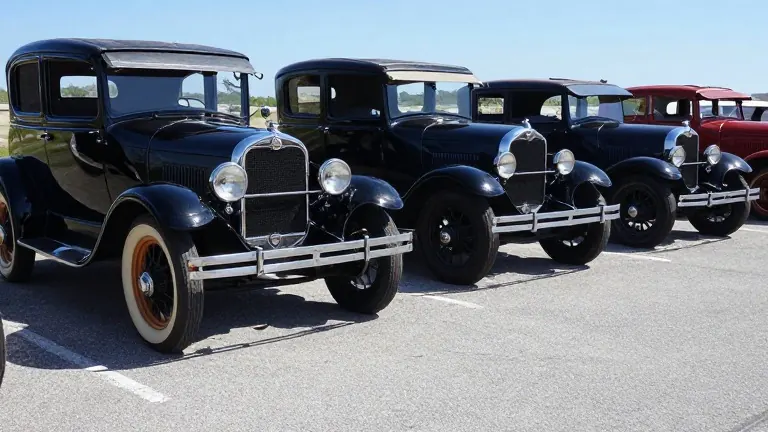
Dennis Stone, president of the Old Dominion Model A Ford Club of Greater Richmond, stands in Glen Allen, Va., watching drivers pull up to the latest gathering. The club exists to maintain a specific slice of automotive history. Their members own Model A Fords, vehicles that Ford Motor Company produced for only four years. Stone says the social energy at these events drives the group. “Oh, it’s great, you know, to see the smile on the faces coming here today. Some lady was hanging out the window just waving,” he said.
Stew Wolfe, the club’s vice president, notes that the cars attract attention on public roads. He points to the horn as a particular crowd pleaser. “We get a lot of smiles per mile. People get excited. And then if we blow the ahooga horn, they are ecstatic, especially kids,” Wolfe said. The reaction suggests the vehicles remain visually and mechanically distinct from modern traffic despite their age.
Henry Nelson, the club secretary, traces the origin of the cars to a shift in Ford’s production strategy. He holds up a newspaper advertisement from December 1927 that announced the arrival of the new Model A. “We’re looking at an advertisement that occurred in the newspaper in December of 1927, advertising the coming of the new Model A Ford,” Nelson said. Ford created the Model A as a direct replacement for the Model T.
Ford manufactured approximately 5 million Model A vehicles between 1927 and 1931. Stone notes that the original factory specifications were sparse. For the most part, the cars lacked radios, air conditioning, or power brakes. “Bare bones driving. They were the cheapest cars on the market back then,” Stone said. The low cost was a primary selling point for buyers in the late 1920s.
Despite the basic nature of the chassis, the Model A included several mechanical advancements for its time. Nelson lists the standard features that set the car apart from its predecessor. “It had brakes on all four wheels. It had shock absorbers. It had a way to check your oil without having to get under the car. Had a dipstick. Also, it had gauges inside. You could tell how fast you were going,” Nelson said. The most notable change was the inclusion of an electric starter, which eliminated the need for hand cranking.
The club meets in the Greater Richmond area to preserve these mechanical systems. Their work focuses on keeping the engines operational for daily use or special events. The group’s activities ensure that the 5 million units produced in the 1920s do not become static museum pieces. Instead, the cars remain active participants in local traffic and social gatherings.