Diplomatic Frontlines: Paris and Abu Dhabi
U.S. Secretary of State Marco Rubio coordinated with G7 counterparts in France while Steve Witkoff and Jared Kushner launched trilateral negotiations in the United Arab Emirates.
By Ivan Dvorak ·
U.S. Secretary of State Marco Rubio and his peers from the Group of Seven developed democracies focused their efforts in Paris on the mechanics of supporting Ukraine as it defends against Russia. This diplomatic activity coincided with the start of three-way talks involving Russia, Ukraine, and the United States in the United Arab Emirates on Tuesday.
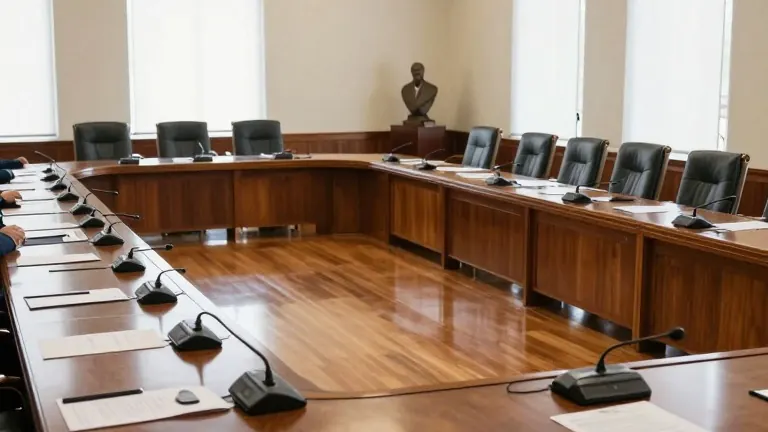
Andrii Sybiha, the foreign minister of Ukraine, began his schedule in Paris with a private session with Rubio. The two men posed for photographs without exchanging words before their discussion. Sybiha then moved to the French foreign ministry to join a larger group meeting with the entire G7 delegation.
The State Department issued a brief statement following the bilateral meeting. It noted that the pair discussed negotiations to end the Russia-Ukraine war, energy resilience, and defense cooperation. The larger G7 session was expected to address defense and security assistance to Ukraine. The administration of U.S. President Donald Trump has reduced this aid, a move that has caused concern in Kyiv and in European capitals including Paris, Berlin, Rome, and London.
In Abu Dhabi, Trump’s envoys Steve Witkoff and Jared Kushner initiated talks with Russian and Ukrainian officials. Their primary objective was to persuade Moscow to agree to broader negotiations that would include key European officials. The goal is to find a resolution to a conflict that has lasted nearly five years.
European leaders have pressed for inclusion in the Abu Dhabi talks. However, two U.S. officials stated on Monday that representatives from Britain, Germany, France, NATO, and the European Union would not join the main discussions. Instead, these groups would discuss potential security guarantees and the long-term security architecture between Russia and Europe prior to the main session. Russia has resisted European participation, insisting the talks proceed strictly as a trilateral format involving only Russia, Ukraine, and the U.S. The three parties last held such talks in February.
German Foreign Minister Johan Wadephul met separately with Rubio on the sidelines of the G7 in Paris. Wadephul was emphatic that Europe must be included in the process. He said, “I am still very grateful to the United States of America for making every effort to get the parties to the conflict to the table. But I made clear again here that Europe belongs at this table. There can be no solution without Europe, only with Europe.”
Rubio stated that the U.S. has no objection to eventual European involvement in the direct talks, but noted that it was not yet time. He told reporters after a full day of meetings, “Ultimately, it would be a positive, but we’ve got a ways to go. But, no, it’s good that they’re talking, it’s good that the trilateral talks are on again. It’s better than not having talks.”
Hostilities continued on the eve of the diplomatic sessions. Russia struck Ukraine’s power grid on Monday, while Ukrainian forces hit one of Russia’s largest oil refineries. Analysts and humanitarian organizations report that the war has killed hundreds of thousands of soldiers and thousands of civilians. Both nations remain locked in battle with no indication that either side is prepared to alter its demands.