23 Years of Solo Shows: Boccia Retrospective Finally Takes Over Every Room
Philip Slein Gallery expands into all rooms for the first time in 23 years to exhibit the career of late American modernist Edward E. Boccia.
By Leila Reynolds ·
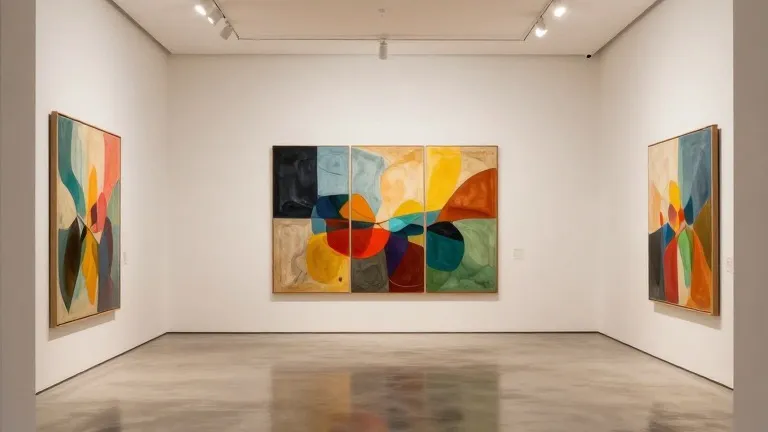
Visitors to the Central West End will find the layout of Philip Slein Gallery altered for the next two months. The space at 4735 McPherson is hosting a career retrospective of Edward E. Boccia, a move that occupies every available room rather than the typical front gallery. This exhibition runs through December 19, with an opening reception scheduled for October 23 from 5 to 8 p.m. The shift in venue usage marks a rare deviation from the gallery's standard practice, which has generally reserved individual shows for its primary room during its 23-year operation.
The expansion allows for a comprehensive survey of more than 30 paintings produced over six decades. Boccia, who resided in St. Louis for 60 years, worked continuously until his death in 2012 at age 91. Gallery owner Philip Slein described the installation as the largest show the venue has hosted, noting that only a major institutional venue could accommodate a larger scale. Slein emphasized that Boccia’s output was relentless, stating that the artist was drawing whenever he was not sleeping or eating.
Boccia was born in New Jersey in 1921 to Italian parents. He served in the World War II Ghost Army and studied at the Pratt Institute and the Art Students League in New York. After returning from the war, he earned degrees from Columbia University. He taught at the Columbus Art School in Ohio, where he introduced Bauhaus principles to his students, before joining the faculty at Washington University in St. Louis in 1951. He remained at the university for over 30 years, retiring in 1986 as professor emeritus.
Rosa Berland, a New York-based art historian and curator, characterized Boccia’s teaching style as rigorous while encouraging students to find their own creative direction. The exhibition includes large-scale works such as the nine-panel autobiographical polyptych 'Eugene's Journey' and the 2004 triptych 'David's Death.' These pieces sit alongside mythic ocean scenes in the hallway and a salon wall in the final room that traces his stylistic evolution from 1950s portraits to a final work painted in 2012. Influences from Paul Cézanne, Pablo Picasso, René Magritte, Renaissance masters, and Max Beckmann are visible throughout the collection.
A companion monograph, 'Edward E. Boccia: Painter of Nightmares and Dreams,' will be published by Hirmer during the exhibition period. Berland spent 14 years researching the book, which serves as the first major scholarly work on the artist. It contains dozens of images, including fold-out plates that illustrate the scale of his multi-panel works, along with historical overviews and essays. The publication aims to present Boccia as a polymath who engaged with philosophy, theology, psychoanalysis, and history without allowing his art to become didactic.
Berland highlighted the role of Morton D. May as Boccia's greatest patron, noting that May's collection was partially gifted to the Saint Louis Art Museum. She framed the retrospective as the story of a young man from New York who achieved success in St. Louis. A pamphlet prepared for the show by Berland and Slein advises viewers to simply experience the work without worrying about its specific meaning. Berland argued that such art requires active engagement, comparing the viewing experience to reading poetry or philosophical texts in an era when audiences rarely slow down.
The exhibition remains open to the public until December 19. The gallery will hold the opening reception on October 23 from 5 to 8 p.m. The show fills the entire floor plan of the venue, a logistical change that reflects the volume of work selected for display.
More Culture · St. Louis news · Report a business · Got a Story?